Excellent!

You got 19 of 20 correctly.

  • 57 Points Won
  • 95% Correct answers
  • 15 Best streak

Check your Stats

Go to Dashboard
spice it up!

BATTLE MODE

Play against others for Extra Points Try a quiz in Battle Mode

Check your Stats

Go to Dashboard
Your results:
  • 1 / 20

    Which U.S. state produces the most beef cattle?

    • 1% Alabama
    • 96% Texas
    • 0% Maine
    • 3% Florida

    There isn’t a single state that doesn’t produce beef, but of all 50, there are some that take it to the next level. Out of all 50 states throughout the US, Texas has the highest number of beef cows, as in 2023, the state had 4.3 million heads. Texas has a huge amount of pasture land perfect for cattle as the beef cows can graze to their heart’s content on grass and other foliage.

    Source: World Animal Foundation

  • 2 / 20

    What is land devoted to the breeding of cattle commonly called?

    • 1% Orchard
    • 0% Forest
    • 1% Cropland
    • 98% Ranch

    A ranch is an area of land given primarily to ranching, the practice of raising grazing livestock such as cattle and sheep. It is a subtype of farm. People who own or operate a ranch are called ranchers, cattlemen, or stockgrowers. Ranching is also a method used to raise less common livestock such as horses, elk, American bison, ostrich, emu, and alpaca.

    Source: Wikipedia

  • 3 / 20

    What is the name of the human-like figure used to deter birds from crops?

    • 1% Mothman
    • 99% Scarecrow
    • 0% Zombie
    • 0% Bogeyman

    Farmers use scarecrows, or human-shaped decoys, to frighten off birds that might eat their seeds or crops. Scarecrow dates from the 1550s — earlier it was known as a shoy-hoy, which imitates the cry of a crow. The original scarecrows were actual people who were hired to stand in the middle of a field scaring crows and other birds away. Mannequins dressed in hats and other clothing mainly filled this role starting in the 16th century, and the word soon came to be used as a pejorative description for a "gaunt, ridiculous person" as well.

    Source: Vocabulary.com

  • 4 / 20

    Which farm animal is known for its grunts, usually written as "oink"?

    • 1% Cows
    • 1% Mules
    • 98% Pigs
    • 0% Sheep

    In English, pigs say "oink." Pigs also squeal, which is a high-pitched whine. "To squeal on someone" also means telling on them, especially concerning a crime. For example, "The robber would have gotten away with the money, but his partner squealed to the police." Another pig noise is the grunt. You probably grunt sometimes too, since it's the sound you make when you do something physically difficult.

    Source: FluentU

  • 5 / 20

    Which of these is a tool traditionally used in farming?

    • 99% Pitchfork
    • 1% Jackhammer
    • 0% Float
    • 0% Ratchet

    A pitchfork or hay fork is an agricultural tool used to pitch loose material, such as hay, straw, manure, or leaves. It has a long handle and usually two to five thin tines designed to move such materials efficiently. The term is also applied colloquially, but inaccurately, to the garden fork. While similar in appearance, the garden fork is shorter and stockier than the pitchfork, with three or four thicker tines intended for turning or loosening the soil of gardens.

    Source: Wikipedia

  • 6 / 20

    Which of these farm products comes from sheep?

    • 2% Bacon
    • 1% Honeydew
    • 97% Lamb
    • 0% Eggs

    Sheep farming or sheep husbandry is the raising and breeding of domestic sheep. It is a branch of animal husbandry. Sheep are raised principally for their meat (lamb and mutton), milk (sheep's milk), and fiber (wool). They also yield sheepskin and parchment. Sheep can be raised in a range of temperate climates, including arid zones near the equator and other torrid zones.

    Source: Wikipedia

  • 7 / 20

    What type of farming uses no synthetic chemicals?

    • 3% Conventional
    • 96% Organic
    • 1% Aquaculture
    • 0% Mixed

    "Organically grown" food is food grown and processed using no synthetic fertilizers or pesticides. Pesticides derived from natural sources (such as biological pesticides) may be used in producing organically grown food. Organic production has been practiced in the United States since the late 1940s. From that time, the industry has grown from experimental garden plots to large farms with surplus products sold under a special organic label.

    Source: United States Environmental Protection Agency

  • 8 / 20

    What livestock can be described as "equine"?

    • 3% Chicken
    • 7% Cow
    • 4% Sheep
    • 86% Horse

    Equine is one of the mammal family of Equidae (order Perissodactyla) that includes modern horses, zebras, and asses, as well as more than 60 species known only from fossils. Wild horses once inhabited much of northern Eurasia, primarily in open areas. They were rather small, short-legged animals, compared with their domesticated descendants, standing only about 47 to 51 inches at the shoulder. In the two millennia BC, horses from many wild populations were domesticated; often the remainder of the wild individuals were exterminated.

    Source: Encyclopedia Britannica

  • 9 / 20

    Which of these is any agricultural foodstuff used to feed livestock?

    • 3% Fungicide
    • 91% Fodder
    • 5% Herbicide
    • 1% Hive

    Fodder, also called provender, is any agricultural foodstuff used specifically to feed domesticated livestock, such as cattle, rabbits, sheep, horses, chickens, and pigs. "Fodder" refers particularly to food given to the animals, rather than that which they forage for themselves. Fodder includes hay, straw, silage, compressed and pelleted feeds, oils and mixed rations, and sprouted grains and legumes. Most animal feed is from plants, but some manufacturers add ingredients to processed feeds that are of animal origin.

    Source: Wikipedia

  • 10 / 20

    What are baby goats called?

    • 98% Kids
    • 1% Kittens
    • 1% Bunnies
    • 0% Puppies

    A newborn baby goat is called a kid. Kids are goats that are under a year old. A group of kids is referred to as a herd or tribe of kids. The word “lamb” only refers to baby sheep and is not used for baby goats. Goats also come with a unique set of unusual anatomy and physical and mental abilities. Baby goats are able to stand and take their first steps within about 10 minutes of being born. This is notably faster than calves and foals, which take about 30 minutes or so to successfully stand and take steps.

    Source: Savvy Farm Life

  • 11 / 20

    Which US State is known for its potato crop?

    • 1% California
    • 99% Idaho
    • 0% Florida
    • 0% Washington

    Potatoes remain the top vegetable crop in the United States. They are grown commercially in 30 states, but Idaho grows more potatoes than any other state, followed by Washington. North Dakota, Wisconsin, and Colorado are also major producers of potatoes. In 2020 a total of 1 million acres of potatoes were harvested in the United States. The average price of potatoes increased by $0.02 to $9.17 per cwt. The total value of the potato crop was $3.88 billion (NASS 2020).

    Source: Ag MRC

  • 12 / 20

    A "poult" is the offspring of which farm animal?

    • 9% Sheep
    • 80% Turkey
    • 9% Pig
    • 2% Cow

    A baby turkey is called a "poult." They're also sometimes called "chicks" as well. Turkey chicks share their title with other birds like pigeons and chickens. When a poult grows up, it is called a "tom" or "gobbler" if it is male, and a "hen" if it is female. A group of turkeys is called a "rafter." Baby turkeys are extraordinarily social animals, and they make many different sounds. The "gobble" isn't the only sound a turkey makes. Even though this is the most commonly known turkey sound, it can make over 20 different noises.

    Source: A-Z Animals

  • 13 / 20

    What farming tool did inventor John Deere develop in 1837?

    • 2% Pickaxe
    • 17% Backhoe
    • 3% Spading fork
    • 78% Steel plow

    John Deere was a blacksmith who developed the first commercially successful, self-scouring steel plow in 1837 and founded the company that still bears his name. When the New England economy collapsed in 1836, he followed other Vermonters to Illinois, where he established a blacksmith shop in Grand Detour. Shortly after arriving, Deere learned from his farmer customers that the commonly used cast-iron plows of the day performed poorly in the sticky soil of the Midwest prairie. Soil clung to the plow bottoms, and farmers had to stop and scrape off the dirt every few feet. Convinced that a plow with a highly polished surface would shed the sticky soil as it moved through the field, Deere made a plow using steel from a broken sawblade. The need for a self-scouring plow was so great, that it is said hundreds of people gathered at the farm of Lewis Crandall near Grand Detour to see the young blacksmith test his new product.

    Source: John Deere

  • 14 / 20

    What is the term for a young cow that has not yet given birth to a calf?

    • 8% Cow
    • 1% Bull
    • 89% Heifer
    • 2% Steer

    A heifer is any young, female, domestic bovine that has not produced offspring. At birth, a female calf is often termed a “heifer calf.” A heifer in the final weeks of pregnancy is dubbed a “springing heifer,” and a heifer that is pregnant for the first time is known as a “bred heifer.” Upon giving birth, heifers become cows. Although cows are known for their udders, heifers do not have visible mammary glands, as the organs develop in response to pregnancy. However, heifers do have visible teats. Heifers typically birth their first calves at just under two years of age, usually bearing one calf at a time.

    Source: Britannica

  • 15 / 20

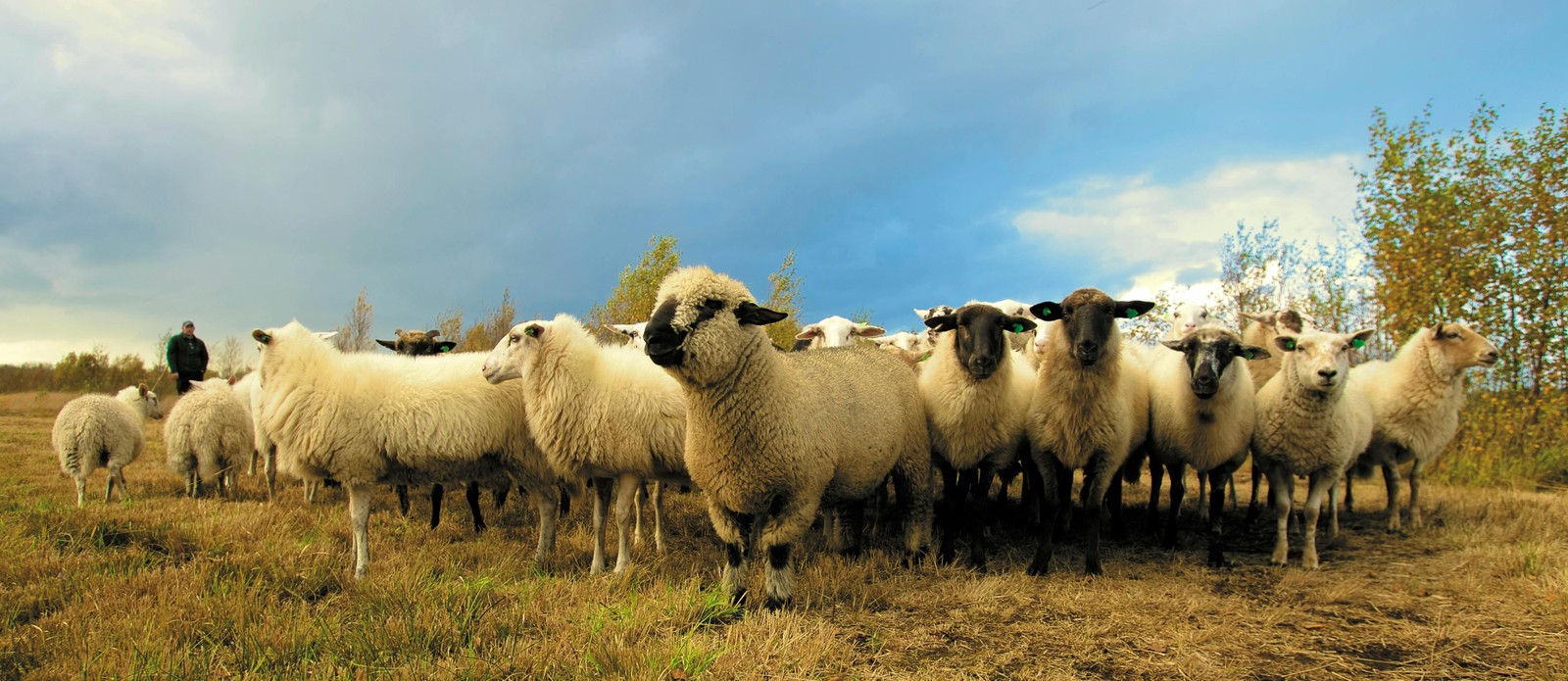
    How often are sheep typically sheared?
    • 66% Once per year
    • 5% Every two years
    • 29% Twice per year
    • 0% Every four years

    Sheep shearing is the process by which the woolen fleece of a sheep is cut off. Typically each adult sheep is sheared once per year. The annual shearing most often occurs in a shearing shed, a facility specially designed to process often hundreds and sometimes more than 3,000 sheep per day. Sheep are shorn in all seasons, depending on the climate, management requirements, and the availability of a wool classer and shearers.

    Source: Wikipedia

  • 16 / 20

    Ameraucana is what type of farm animal?

    • 49% Chicken
    • 14% Pig
    • 20% Cow
    • 17% Horse

    The Ameraucana is an American breed of domestic chicken. Developed in the United States in the 1970s, it derives from Araucana chickens from Chile. It was bred to retain the blue-egg gene but eliminate the lethal alleles of the parent breed. There are both standard-sized and bantam versions. The Ameraucana is one of the few chicken breeds to lay blue eggs. It shows many similarities to the Araucana, including the pea comb and the blue egg gene. It is tailed, muffed, and bearded, whereas the Araucana in the United States has ear tufts and is rumpless. The earlobes are small and round, the wattles small or absent; earlobes, comb, and wattles are all red. The shanks are slate-blue, tending to black in the black plumage variant. Nine color variants are recognized in the American Standard of Perfection: black, blue, blue wheaten, brown red, buff, silver, wheaten, white, and blue.

    Source: Wikipedia

  • 17 / 20

    Which of these is a hand tool for mowing grass or harvesting crops?

    • 2% Hose
    • 1% Saw
    • 3% Mallet
    • 94% Scythe

    A scythe is an agricultural hand tool for mowing grass or harvesting crops. It is historically used to cut down or reap edible grains, before the process of threshing. The scythe has been largely replaced by horse-drawn and then tractor machinery but is still used in some areas of Europe and Asia. Reapers are bladed machines that automate the cutting of the scythe, and sometimes subsequent steps in preparing the grain or the straw or hay.

    Source: Wikipedia

  • 18 / 20

    Which farm animal is used to hunt for truffles?

    • 10% Sheep
    • 6% Horse
    • 79% Pig
    • 5% Chicken

    Pigs were the original truffle hunters, however, dogs have largely replaced pigs in the truffle-hunting world. Pigs are attracted to the pheromones that truffles release, due to the similar compounds that mirror testosterone found in pigs (which is why we think of it as an aphrodisiac), and would therefore, naturally hunt for them. However, due to the extreme excitement of the pigs, and their erratic digging method, they end up destroying the environment and eating those precious truffles. Due to the environmental impact, pigs have been banned in Italy for truffle hunting since 1985. Dogs have been introduced, because they can be trained to find the exact location of the truffle, do not disrupt the ecosystem, and are not attracted to it. The preferred breed for a truffle hunting dog in Italy is the Lagotto Romognolo, however, any breed can become a truffle hunter, and other breeds commonly used are pointers and braccos.

    Source: Sabatino Truffles

  • 19 / 20

    Which of these states is known for its farm-raised catfish?

    • 86% Mississippi
    • 4% Nebraska
    • 6% Oregon
    • 4% Virginia

    Out of all of the states in the U.S., Mississippi ranks No. 1 for catfish farming and contributes hundreds of millions of dollars to the economy as a result. Mississippi farmers maintain about 36,000 acres of active aquaculture ponds, down sharply from the peak of around 110,000 acres in the early 2000s. While U.S.-raised catfish represented 73% of the nation’s catfish consumption in 2006, that number dropped to just 38% in 2019 with lower-priced foreign fish products comprising the majority.

    Source: Mississippi Farm Country

  • 20 / 20

    Which of these is a unit of measurement for crops?

    • 1% Kelvin
    • 1% Mole
    • 1% Ampere
    • 97% Bushel

    Agriculture is one of the oldest industries in recorded history. This field has specific terms and vocabulary. For example, a bushel is the standard unit of measurement for crops. A modern dry bushel measurement is 64 pints. However, any single bundle or measurement of a dry crop or product can informally be referred to as a bushel as well.

    Source: Nadric Injury Lawyers

Quizzes for you

Try other topics

Play a Quiz